


Nel lavoro di Carmen Rieger la forma non è mai definitiva, il colore non è mai semplice decorazione, il movimento non è mai solo gesto. Tutto fluisce, tutto accade. La sua ricerca artistica nasce da un ascolto profondo della materia e si sviluppa come un atto di riconnessione con uno degli elementi più antichi e sacri dell’esistenza: l’acqua.
Nata in Romania e da molti anni attiva in Austria, Carmen Rieger porta con sé una formazione solida nel campo del design industriale e della progettazione di arredi. Un percorso che ha affinato il suo sguardo sulla struttura, sull’equilibrio e sulla relazione tra funzione e forma. Ma è nel 2018 che avviene una svolta decisiva: l’artista abbandona la rigidità del progetto per lasciarsi attraversare da una nuova necessità espressiva, dando vita a IRIS-Fluidism, un linguaggio visivo ispirato al movimento dei fluidi e alla loro capacità di generare forme organiche, complesse, vitali.
IRIS-Fluidism non è uno stile, ma una dichiarazione di appartenenza al flusso della vita. È un atto di fede nella fluidità come principio universale: biologico, spirituale, sociale. Nelle opere di Carmen Rieger l’acqua diventa matrice simbolica e sostanza concettuale, presenza invisibile ma assoluta, testimone dell’interdipendenza di tutte le forme di vita. L’acqua non è solo materia: è memoria, è linguaggio, è coscienza.
Ogni lavoro si configura come una micro-cosmologia in cui il colore assume un valore archetipico. L’artista sceglie consapevolmente i sette colori dell’arcobaleno, e tutte le loro infinite combinazioni, come sistema cromatico costante, quasi rituale. Il colore diventa vibrazione, frequenza emotiva, energia in movimento. Nulla è casuale, nulla è statico: le forme sembrano nascere, trasformarsi, rigenerarsi sotto lo sguardo di chi osserva.
L’acqua, nella visione di Carmen Rieger, è un’entità viva e intelligente. È forza creatrice e potere rigenerante, cura e ascolto, sensibilità e comprensione. È un’artista essa stessa, capace di scolpire la materia, di modellare il tempo, di unire il visibile all’invisibile. Così, l’essere umano — composto in gran parte di acqua — viene ricondotto alla propria natura originaria: fragile, mutevole, interconnessa.
IRIS-Fluidism rappresenta il momento più autentico e radicale del suo percorso artistico, l’essenza stessa della sua identità creativa. Attraverso questa poetica, Carmen Rieger ci invita a riconoscere la bellezza del divenire, ad accettare la trasformazione come condizione necessaria dell’esistenza, a riscoprire l’amore come principio di relazione tra tutte le cose.
In questa intervista, l’artista ci accompagna all’interno del suo universo fluido, condividendo visioni, pensieri e intuizioni che attraversano arte, spiritualità e coscienza contemporanea. Un dialogo che non si limita a raccontare un percorso, ma apre uno spazio di riflessione profonda sul nostro modo di abitare il mondo — e il flusso incessante della vita.


1. IRIS FLUIDISM nasce nel 2018 come punto di svolta radicale nel tuo percorso artistico. Ricordi il momento esatto in cui hai capito che questa visione sarebbe diventata il fulcro della tua ricerca?
IRIS FLUIDISM è nato da un risveglio interiore.
Nell'aprile del 2018, il giorno del mio compleanno, durante un semplice esperimento con acqua e farina nella mia cucina, ho creato la forma di un volto umano che sembrava vivo: fluido, organico, quasi pronto a dialogare con me.
Ho portato con me quest'immagine, fisicamente e mentalmente, per diverse settimane perché era diventata una vera e propria ossessione. Inizialmente ho cercato di trasporla in un disegno simile alla fotografia che mi aveva affascinato, ed è stato allora che ho capito che era giunto il momento di una rottura definitiva nel modo in cui la realtà viene percepita ed espressa attraverso l'arte. Col senno di poi, ho capito il significato di tutti gli anni in cui, fin dall'infanzia, avevo dialogato con l'acqua – un dialogo che sembrava un gioco, poi un hobby, fino al giorno d'estate del 2018, quando ho completato il mio primo disegno più complesso, come se provenisse da un altro mondo. Questo ha risvegliato tutto il mio essere da un sonno profondo.
In quel momento, ho capito di non essere più interessato alle strutture fisse, isolate e immobili tipiche delle rappresentazioni artistiche convenzionali. Ciò che avevo visto in quella prima fotografia rifletteva qualcosa di essenziale: il modo in cui la vita stessa si muove, trasforma e connette ogni cosa.
Quell'esperienza ha segnato un punto di non ritorno. IRIS FLUIDISMO è diventata la mia nuova identità, la mia essenza, poiché si allineava perfettamente sia con la mia trasformazione interiore che con la mia fascinazione per le forme fluide e organiche e con il dialogo di lunga data che avevo avviato con l'ACQUA.
2. In che modo la tua formazione in Industrial Design e nel design di mobili ha influenzato il modo in cui strutturi forme fluide e organizzi le composizioni nelle tue opere?
La mia formazione in Industrial Design ha lasciato un segno profondo, presente in ogni opera, anche quando le forme appaiono completamente fluide e organiche. Il design mi ha insegnato a ricercare nuove forme e strutture in natura e ha coltivato la mia disciplina, la mia precisione e la mia comprensione dell'equilibrio tra estetica e funzione.
In IRIS FLUIDISM, la fluidità dei motivi che scelgo non è mai casuale; è costruita con cura. Sotto le forme fluide e interconnesse, c'è sempre un sistema compositivo rigoroso e ben organizzato. Questo dialogo tra controllo e libertà permette alle mie opere di rimanere armoniose e coerenti, conferendo chiarezza visiva a elementi apparentemente intangibili come il movimento, la fluida connessione delle energie psichiche e la dinamica delle forme liquide.
3. L'acqua è il cuore concettuale del tuo lavoro, che descrivi come testimone dell'interconnessione di tutti gli esseri viventi. Come si traduce questa visione nel tuo processo creativo quotidiano?
L'acqua plasma non solo le mie opere, ma anche il modo in cui sono presente nel processo creativo. Inizio ogni giorno con un rituale semplice e costante, rivolgendomi all'acqua con gratitudine e apertura, tenendo sempre a mente l'opera su cui lavorerò.
Questo rituale, combinato con il mio stile di vita e l'apertura alla dimensione spirituale, crea uno spazio interiore di chiarezza e ricettività. È un momento in cui sento aprirsi un sottile "canale" di connessione, una profonda risonanza in cui l'intuizione diventa la guida. In quello spazio, so esattamente dove deve essere costruita ogni linea fluida e dove deve apparire una certa tonalità.
Ho imparato ad affrontare ogni giorno con consapevolezza, pazienza, gratitudine e rispetto per la vita. Osservo attentamente come si muove l'acqua, come interagisce con diverse sostanze e superfici, come risponde alla luce, sapendo che porta con sé memoria ed emozione. Questo processo sottile e complesso si riflette nelle mie opere attraverso il movimento fluido delle linee e l'uso dei colori dello spettro solare, creando un'atmosfera di continua trasformazione.
La creazione diventa così un dialogo silenzioso con l'acqua, un atto di ascolto piuttosto che di imposizione.
4. Nelle tue opere, scegli di rappresentare solo la parte liquida dei corpi, senza distruggerne l'identità o la riconoscibilità. Che relazione vedi tra forma, memoria e trasformazione?
Credo che l'identità trascenda la forma solida. La memoria, l'essenza liquida e la presenza emotiva sono, per natura, fluide. In IRIS FLUIDISM, quando scelgo di rappresentare solo l'aspetto liquido dei corpi, non distruggo l'identità, ma ne rivelo lo strato profondo e invisibile. La trasformazione non segna una rottura, ma una continuità: proprio come l'acqua scorre e cambia costantemente mantenendo la sua essenza, le forme si evolvono e la memoria preserva il nucleo di ciò che siamo. Questa armonia tra fluidità e permanenza riflette la mia intera visione della vita e dell'interconnessione di tutti gli esseri.
5. Nei tuoi ritratti fluidi, nonostante l'assenza di una rappresentazione figurativa tradizionale, emerge chiaramente il carattere interiore del soggetto. Come avviene questa trasmissione emotiva?
La trasmissione emotiva avviene attraverso la risonanza, non attraverso la semplice rappresentazione. Colore, ritmo e movimento fluido diventano vettori di informazioni emotive in modo diretto e intuitivo. Man mano che la rappresentazione si dissolve, l'essenza del soggetto diventa visibile. L'osservatore la riconosce non attraverso l'intelletto, ma attraverso il sentimento, attraverso l'emozione – ed è qui che IRIS FLUIDISM esprime il suo linguaggio più autentico: quello della connessione e della profonda sensibilità.
6. L'uso esclusivo dei sette colori dell'arcobaleno è una scelta costante e simbolica nel tuo lavoro. Che significato ha per te questa tavolozza di colori universale?
Ho scelto di lavorare con i sette colori dell'arcobaleno e le sfumature ottenute combinandoli perché simboleggiano l'unità nella diversità. Sono universali, senza tempo e profondamente connessi sia alla natura che alla spiritualità. Ogni colore porta con sé una propria vibrazione e insieme formano un insieme armonioso. La scelta di questa tavolozza non è una limitazione, ma una decisione consapevole: un modo per esprimere infinite variazioni all'interno di una struttura sacra. In questo modo, i colori riflettono l'essenza stessa della vita: complessa, diversificata e profondamente interconnessa.
7. Descrivi l'acqua come un'entità capace di guarire, rigenerare e persino creare arte. In che modo l'acqua diventa "artista" nelle tue opere?
L'acqua diventa artista attraverso la sua intelligenza, memoria e autonomia. Non cerco di dominarla, ma di collaborare con lei, di sentire e decifrare il linguaggio attraverso cui comunica. Essendo il nostro corpo composto per il 70% da acqua, mi aiuta a percepirne i movimenti che guidano la composizione e le reazioni che influenzano la forma finale. In questo processo, l'autorialità diventa collettiva: l'acqua porta con sé spontaneità, verità e imprevedibilità – qualità che non possono essere controllate, ma solo rispettate. Quindi, l'acqua non è solo un soggetto, ma una forza creativa attiva, che agisce sottilmente attraverso di me e la mia energia artistica.
8. Il tuo lavoro suggerisce una visione dell'essere umano come parte di un flusso biologico e cosmico continuo. Quanto è importante il rapporto tra arte, spiritualità e consapevolezza nella tua pratica?
Questo rapporto è fondamentale. Per me, l'arte è una forma di consapevolezza, un invito a riconnettersi con qualcosa di più grande di noi stessi. La spiritualità nel mio lavoro non è religiosa, ma esperienziale: uno stato di presenza, gratitudine e connessione. Attraverso IRIS FLUIDISM, il mio obiettivo è ricordare che non siamo separati dalla natura o dall'universo, ma partecipi di un flusso continuo di vita, energia e coscienza.
9. Vivendo tra Romania e Austria, in che modo questa esperienza geografica e culturale ha plasmato la tua sensibilità artistica e la tua percezione del rapporto tra natura, cultura e identità?
Vivere tra Romania e Austria mi ha insegnato a combinare emozione e armonia, passione e struttura. La Romania mi ha regalato i colori vibranti della natura e simboli pieni di vita; l'Austria mi ha offerto equilibrio, chiarezza e raffinatezza compositiva. In IRIS FLUIDISM, questi mondi si incontrano: un dialogo fluido tra spontaneità e organizzazione, tra vibrazione dei colori ed equilibrio delle forme, tra Oriente e Occidente.
10. Guardando al futuro, come immagini l'evoluzione di IRIS FLUIDISM? È un linguaggio in continua trasformazione o un punto di arrivo definitivo?
IRIS FLUIDISM è un linguaggio in continuo movimento, sempre aperto a nuove esplorazioni. Attraverso ogni opera, cerco di presentare qualcosa di nuovo, lasciando che lo stile si evolva come un flusso continuo – un flusso in cui colore, forma ed emozione si fondono, aprendo costantemente nuove prospettive. Non è un punto finale, ma un'esperienza viva che cresce insieme a me e al mondo che mi circonda.


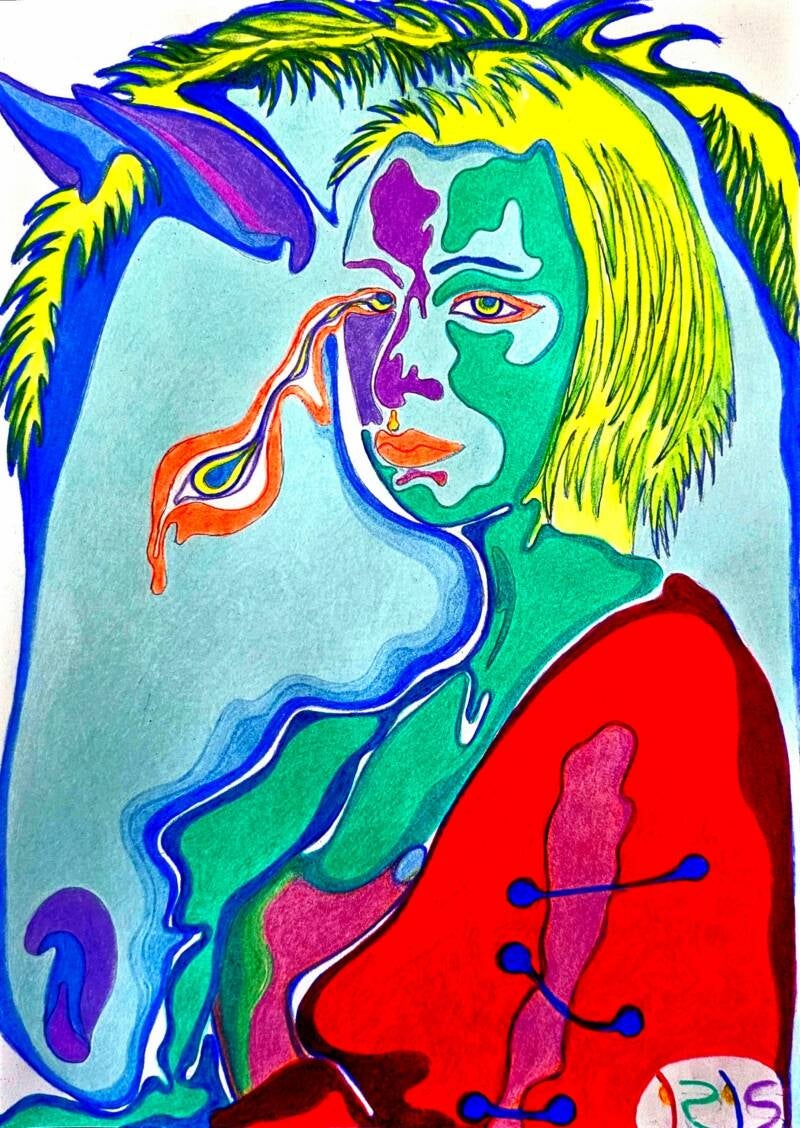
Nel percorso di Carmen Rieger, l’arte non è un territorio da delimitare, ma un flusso da attraversare. IRIS-Fluidism non si esaurisce in una cifra stilistica, né in una ricerca formale: è una visione del mondo, un atto di consapevolezza, una presa di posizione poetica e spirituale.
Attraverso l’acqua — elemento primordiale, silenzioso e onnipresente — l’artista ci ricorda la nostra natura fluida, la nostra appartenenza a un sistema di relazioni invisibili ma profondamente reali. Ogni sua opera diventa così una soglia: invita a rallentare, ad ascoltare, a riconoscere nel movimento continuo delle forme una metafora del nostro stesso divenire.
Il colore, con le sue vibrazioni arcobaleniche, non è solo luce che si espande, ma energia che connette. Le superfici non si impongono: respirano. Le composizioni non si chiudono: si trasformano. In questo spazio sospeso tra materia e spiritualità, l’arte si fa esperienza immersiva, contemplazione, dialogo silenzioso con ciò che ci attraversa.
Carmen Rieger affida alla fluidità il compito di raccontare l’interdipendenza, la rigenerazione, la possibilità costante di rinascita. E forse è proprio qui che risiede la forza del suo linguaggio: nel ricordarci che tutto scorre, che nulla è immobile, che ogni fine è già trasformazione.
IRIS-Fluidism non è soltanto un momento della sua carriera artistica: è la sua dichiarazione d’essenza. Un invito a riconoscere nell’acqua non solo la sostanza della vita, ma la metafora più autentica della nostra esistenza.
E nel fluire silenzioso delle sue opere, siamo chiamati anche noi a ritrovare il nostro ritmo, il nostro respiro, il nostro personale modo di scorrere nel mondo.


Testo a cura di Maria Di Stasio © 2026 – Tutti i diritti riservati
In Carmen Rieger's work, form is never definitive, color is never mere decoration, movement is never just gesture. Everything flows, everything happens. Her artistic research stems from a profound understanding of matter and develops as an act of connection with one of the most ancient and sacred elements of existence: water.
Born in Romania and active for many years in Austria, Carmen Rieger brings with her a solid background in industrial and furniture design. This journey has refined her gaze on structure, balance, and the relationship between function and form. But it was in 2018 that a decisive turning point occurred: the artist abandoned the rigidity of the project to allow herself to be driven by a new expressive need, giving life to IRIS-Fluidism, a visual language inspired by the movement of fluids and their ability to generate organic, complex, and vital forms.
IRIS-Fluidism is not a style, but a declaration of belonging to the flow of life. It is an act of faith in fluidity as a universal principle: biological, spiritual, and social. In Carmen Rieger's works, water becomes a symbolic matrix and conceptual substance, an invisible yet absolute presence, a witness to the interdependence of all life forms. Water is not merely matter: it is memory, language, and consciousness.
Each work is configured as a microcosmology in which color takes on an archetypal value. The artist consciously chooses the seven colors of the rainbow, and all their infinite combinations, as a constant, almost ritualistic chromatic system. Color becomes vibration, emotional frequency, energy in motion. Nothing is random, nothing is static: forms seem to be born, transform, and regenerate before the gaze of the observer.
Water, in Carmen Rieger's vision, is a living and intelligent entity. It is a creative force and a regenerating power, care and listening, sensitivity and understanding. It is an artist in itself, capable of sculpting matter, shaping time, and uniting the visible with the invisible. Thus, the human being—composed largely of water—is brought back to its original nature: fragile, changeable, interconnected.
IRIS-Fluidism represents the most authentic and radical moment of her artistic journey, the very essence of her creative identity. Through this poetics, Carmen Rieger invites us to recognize the beauty of becoming, to accept transformation as a necessary condition of existence, to rediscover love as the principle of connection between all things.
In this interview, the artist leads us into her fluid universe, sharing visions, thoughts, and insights that intersect art, spirituality, and contemporary consciousness. This dialogue does not simply describe a journey, but opens a space for profound reflection on our way of inhabiting the world—and the incessant flow of life.
1.IRIS FLUIDISM was born in 2018 as a radical turning point in your artistic journey. Can you recall the exact moment when you realized this vision would become the core of your research?
IRIS FLUIDISM began as an inner awakening.
In April 2018, on my birthday, during a simple experiment with water and flour in my kitchen, I created the shape of a human face that seemed alive — fluid, organic, almost ready to engage in dialogue with me.
I carried this image with me, physically and mentally, for several weeks because it had become a true obsession. I initially tried to transpose it into a drawing close to the photograph that had fascinated me, and that’s when I realized it was time for a definitive rupture in the way reality is perceived and expressed through art.
In retrospect, I understood the meaning of all the years when, since childhood, I had been engaging in a dialogue with water — a dialogue that seemed like play, then a hobby, until the summer day of 2018 when I completed my first more complex drawing, as if coming from another world. This awakened my entire being from a deep sleep.
At that moment, I knew I was no longer interested in fixed, isolated, immobile structures typical of conventional artistic representations. What I had seen in that first photograph reflected something essential: the way life itself moves, transforms, and connects everything.
That experience marked a point of no return. IRIS FLUIDISM became my new identity, my essence, as it perfectly aligned with both my inner transformation and my fascination with fluid, organic forms and the long-standing dialogue I had initiated with WATER.
2.How has your background in Industrial Design and furniture design influenced the way you structure fluid forms and organize the compositions in your artworks?
My training in Industrial Design left a profound mark, present in every work, even when the forms appear completely fluid and organic. Design taught me to seek new forms and structures in nature and cultivated my discipline, precision, and understanding of the balance between aesthetics and function.
In IRIS FLUIDISM, the fluidity of the motifs I choose is never accidental; it is carefully constructed. Beneath the flowing and interconnected forms, there is always a rigorous, well-organized compositional system.
This dialogue between control and freedom allows my works to remain harmonious and coherent, providing visual clarity to seemingly intangible elements such as movement, the fluid connection of psychic energies, and the dynamics of liquid forms.
3.Water lies at the conceptual heart of your work, which you describe as a witness to the interconnectedness of all living things. How does this vision translate into your daily creative process?
Water shapes not only my works but also how I am present in the creative process. I begin each day with a simple, consistent ritual, addressing water with gratitude and openness while keeping in mind the piece I will work on.
This ritual, combined with my lifestyle and openness to the spiritual dimension, creates an inner space of clarity and receptivity. It is a moment when I feel a subtle “channel” of connection opening — a deep resonance where intuition becomes the guide. In that space, I know precisely where each fluid line should be constructed and where a certain hue should appear. I have learned to approach each day with awareness, patience, gratitude, and respect for life. I observe carefully how water moves, how it interacts with different substances and surfaces, how it responds to light — knowing it carries memory and emotion. This subtle and complex process is reflected in my works through the fluid movement of lines and the use of colors from the solar spectrum, creating an atmosphere of continuous transformation.
Creation thus becomes a silent dialogue with water — an act of listening rather than imposing.
4.In your works, you choose to depict only the liquid part of bodies, without destroying their identity or recognizability. What relationship do you see between form, memory, and transformation?
I believe identity transcends solid form. Memory, the liquid essence, and emotional presence are, by nature, fluid. In IRIS FLUIDISM, when I choose to portray only the liquid aspect of bodies, I do not destroy identity — I reveal its profound, invisible layer. Transformation does not mark a rupture, but continuity: just as water flows and constantly changes while retaining its essence, forms evolve, and memory preserves the core of who we are. This harmony between fluidity and permanence reflects my entire vision of life and the interconnectedness of all beings.
5.In your fluid portraits, despite the absence of traditional figurative representation, the inner character of the subject clearly emerges. How does this emotional transmission occur?
Emotional transmission occurs through resonance, not simple representation. Color, rhythm, and fluid movement become carriers of emotional information in a direct and intuitive way. As the representation dissolves, the essence of the subject becomes visible. The viewer recognizes it not through intellect, but through feeling, through emotion — and this is where IRIS FLUIDISM expresses its most authentic language: that of connection and profound sensitivity.
6.The exclusive use of the seven colors of the rainbow is a constant and symbolic choice in your work. What meaning does this universal color palette hold for you?
I chose to work with the seven colors of the rainbow and the shades obtained by combining them because they symbolize unity in diversity. They are universal, timeless, and deeply connected to both nature and spirituality. Each color carries its own vibration, and together they form a harmonious whole. Choosing this palette is not a limitation but a conscious decision — a way to express infinite variation within a sacred structure. In this way, the colors reflect the very essence of life: complex, diverse, and deeply interconnected.
7.You describe water as an entity capable of healing, regenerating, and even creating art. In what way does water become an “artist” within your works?
Water becomes an artist through its intelligence, memory, and autonomy. I do not attempt to dominate it, but to collaborate with it, to feel and decipher the language through which it communicates. Our bodies being 70% water, it helps me perceive its movements that guide composition and reactions that influence the final form. In this process, authorship becomes collective: water brings spontaneity, truth, and unpredictability — qualities that cannot be controlled but only respected. Thus, water is not just a subject, but an active creative force, acting subtly through me and my artistic energy.
8.Your work suggests a vision of the human being as part of a continuous biological and cosmic flow. How important is the relationship between art, spirituality, and awareness in your practice?
This relationship is fundamental. For me, art is a form of awareness — an invitation to reconnect with something greater than ourselves. Spirituality in my work is not religious, but experiential: a state of presence, gratitude, and connection. Through IRIS FLUIDISM, I aim to remind that we are not separate from nature or the universe, but participants in a continuous flow of life, energy, and consciousness.
9.Living between Romania and Austria, how has this geographical and cultural experience shaped your artistic sensitivity and your perception of the relationship between nature, culture, and identity?
Living between Romania and Austria has taught me to combine emotion with harmony, passion with structure. Romania gave me the vibrant colors of nature and symbols full of life; Austria offered me balance, clarity, and refinement in composition. In IRIS FLUIDISM, these worlds meet: a fluid dialogue between spontaneity and organization, between the vibration of colors and the balance of forms, between East and West.
10.Looking toward the future, how do you envision the evolution of IRIS FLUIDISM? Is it a language in constant transformation or a definitive point of arrival?
IRIS FLUIDISM is a language in continuous motion, always open to new explorations. Through each work, I try to present something new, allowing the style to evolve as a continuous flow — a flow in which color, form, and emotion merge, constantly opening new perspectives. It is not a final point, but a living experience that grows along with me and with the world around me.
In Carmen Rieger's work, art is not a territory to be delimited, but a flow to be traversed. IRIS-Fluidism is not limited to a stylistic signature, nor to formal research: it is a vision of the world, an act of awareness, a poetic and spiritual stance.
Through water—a primordial element, silent and omnipresent—the artist reminds us of our fluid nature, our belonging to a system of invisible yet profoundly real relationships. Each of her works thus becomes a threshold: it invites us to slow down, to listen, to recognize in the continuous movement of forms a metaphor for our very becoming.
Color, with its rainbow vibrations, is not just light that expands, but energy that connects. Surfaces do not impose themselves: they breathe. Compositions do not close themselves: they transform. In this space suspended between matter and spirituality, art becomes an immersive experience, contemplation, a silent dialogue with what passes through us.
Carmen Rieger entrusts fluidity with the task of expressing interdependence, regeneration, and the constant possibility of rebirth. And perhaps this is precisely where the strength of her language lies: in reminding us that everything flows, that nothing stands still, that every end is already transformation.
IRIS-Fluidism is not just a moment in her artistic career: it is her declaration of essence. An invitation to recognize in water not only the substance of life, but the most authentic metaphor of our existence.
And in the silent flow of her works, we too are called to rediscover our own rhythm, our own breathing, our own way of flowing through the world.
Aggiungi commento
Commenti
Cara Maria,
desidero ringraziarti di cuore per aver pubblicato la mia intervista e per aver scritto un testo di presentazione così bello, profondo e speciale su di me e su IRIS-Fluidism.
Le tue parole mi hanno toccata profondamente. Hai saputo cogliere non solo il mio percorso artistico, ma anche la visione interiore e l’essenza spirituale che danno forma al mio lavoro. È raro incontrare una curatrice capace di ascoltare con tanta sensibilità e di tradurre un linguaggio artistico in un’espressione così raffinata e autentica.
Grazie per aver visto oltre la superficie, per aver riconosciuto il nucleo fluido della mia ricerca e per averlo raccontato con tale eleganza e profondità. Il tuo testo rende onore non solo alle mie opere, ma anche alla filosofia che le sostiene.
Ti sono sinceramente grata per il tuo sostegno, la tua intuizione e la tua generosità.
Con stima e riconoscenza,
IRIS Fluidism 🎨🌊🌈