

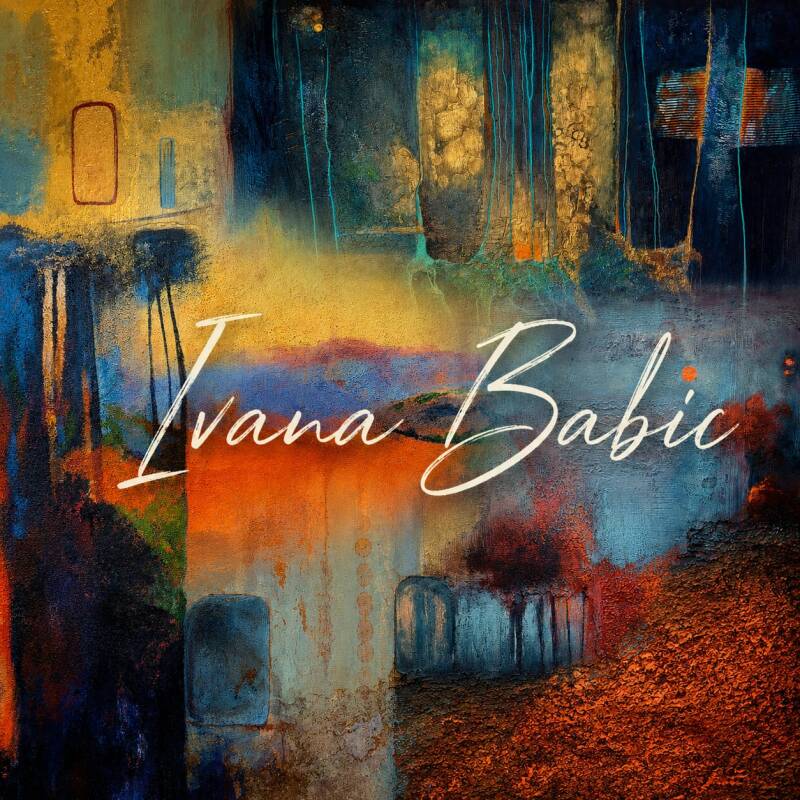
L'opera di Ivana Babic si sviluppa all'interno di un territorio poetico in cui identità, memoria e trasformazione diventano elementi di una stessa, incessante ricerca esistenziale. Il suo percorso artistico appare come un attraversamento continuo di confini: geografici, culturali e interiori. Nata a Belgrado, cresciuta tra Sarajevo e la capitale serba e residente in Italia da oltre vent'anni, l'artista porta dentro di sé una geografia complessa, fatta di appartenenze multiple e di radici che non si escludono, ma si intrecciano in una trama di significati sempre in divenire.
La sua pratica creativa nasce proprio da questa condizione di attraversamento. Nelle sue opere non esiste un'identità immobile, definita una volta per tutte; al contrario, l'essere umano appare come una costruzione continua, un paesaggio in mutazione nel quale il ricordo non è semplice archivio del passato, ma materia viva che continua a modellare il presente. La memoria, nelle immagini di Ivana Babic, diviene una forza generativa, una presenza silenziosa che abita il tempo e ne trasforma costantemente la percezione.
Ciò che colpisce del suo linguaggio è la capacità di muoversi in uno spazio sospeso tra reale e immaginario, tra esperienza personale e dimensione universale. Alberi, uccelli, finestre, porte, scale e maschere non sono meri elementi figurativi, ma archetipi, simboli che appartengono a un patrimonio collettivo e che l'artista rielabora per costruire una narrazione aperta, capace di accogliere le interpretazioni e le memorie di chi osserva. Le sue opere non impongono significati; piuttosto, suggeriscono, evocano, invitano all'ascolto di qualcosa che esiste al di sotto della superficie delle cose.
L'albero, simbolo ricorrente nella sua ricerca, diventa emblema di questa tensione tra permanenza e trasformazione: le radici affondano nella memoria e nelle origini, mentre i rami si protendono verso il cambiamento e il futuro. Accanto ad esso compare spesso la figura dell'uccello, e in particolare del pettirosso, presenza discreta e luminosa che incarna la resilienza, la capacità di attraversare le difficoltà senza smarrire la propria luce interiore. Sono immagini che raccontano il desiderio umano di appartenere a una storia e, allo stesso tempo, di continuare a cercare nuovi orizzonti.
La pratica di Ivana Babic si muove inoltre tra pittura, illustrazione e poesia, discipline che nel suo percorso non rappresentano linguaggi separati ma diverse espressioni di una stessa necessità creativa. La parola e l'immagine si inseguono, si completano e si alimentano reciprocamente, dando vita a un universo poetico in cui ogni elemento contribuisce alla costruzione di una visione complessa e stratificata della realtà.
In un'epoca dominata dalla velocità, dalla sovrabbondanza di immagini e dalla frammentazione dell'esperienza, l'opera di Ivana Babic assume anche un valore profondamente contemporaneo e, in un certo senso, resistente. Le sue immagini chiedono tempo. Chiedono di essere abitate, attraversate lentamente, osservate più volte. L'artista costruisce opere che si offrono come soglie, come luoghi di incontro tra il proprio universo interiore e quello dello spettatore, lasciando volutamente aperti spazi di silenzio e di possibilità interpretativa.
Ed è forse proprio qui che risiede la forza della sua ricerca: nella capacità di rendere visibile l'invisibile. Emozioni, intuizioni, ricordi e stati di coscienza trovano forma in immagini che non cercano di spiegare il mondo, ma di evocarlo. L'arte diventa così un ponte tra dimensione individuale e collettiva, un luogo in cui riconoscersi e ritrovarsi, uno spazio in cui l'essere umano può ancora sostare e interrogarsi sul mistero della propria esistenza.
L'intervista che segue ci conduce all'interno di questo universo poetico e simbolico, permettendoci di comprendere più da vicino il pensiero e la sensibilità di un'artista che fa della ricerca interiore, del dialogo tra culture e della meraviglia verso l'invisibile il cuore pulsante della propria pratica creativa. In un tempo che tende a consumare rapidamente le immagini, Ivana Babic ci invita invece a rallentare, a contemplare e a riscoprire il valore profondo delle domande che abitano il nostro essere nel mondo.
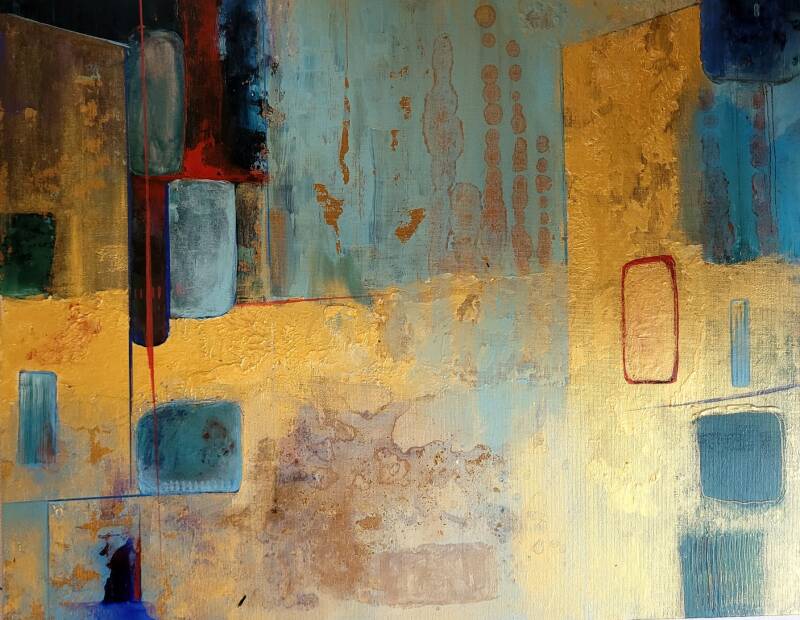
Between the Walls 50X40cm

Burning Silence 70 x 50 cm
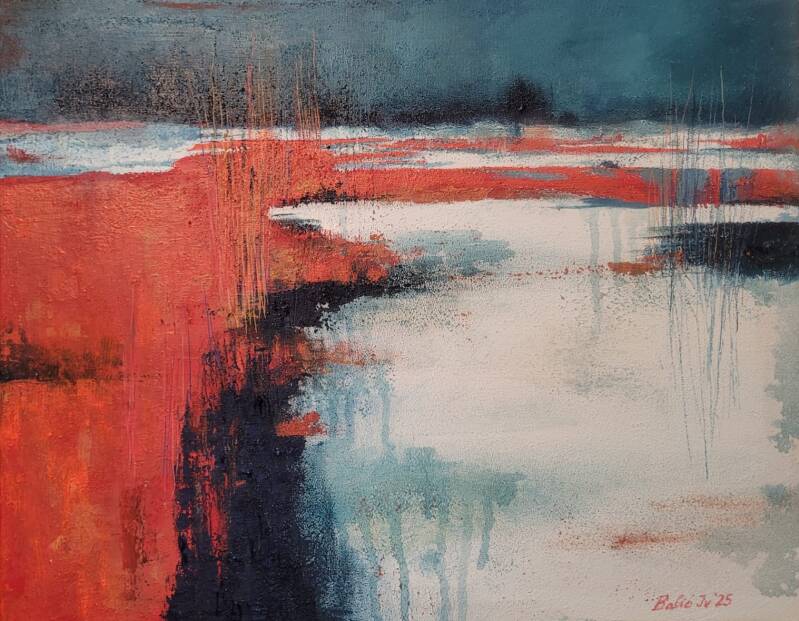
Edge of Quiet_50X40cm
1.La tua arte esplora temi come identità, memoria e trasformazione.In che modo le tue esperienze personali hanno influenzato questaricerca?
La mia ricerca nasce dal tentativo di comprendere come si costruiscel'identità nel corso della vita. Sono nata a Belgrado, ho trascorsol'infanzia tra Sarajevo e Belgrado e vivo in Italia da oltre vent'anni.Attraversare luoghi, lingue e contesti culturali diversi mi ha portata ainterrogarmi su cosa ci definisca veramente e su quale parte di noirimanga immutata nonostante il cambiamento.Per questo nelle mie opere ricorrono spesso i temi della memoria e dellatrasformazione. Non intendo la memoria come semplice ricordo delpassato, ma come una forza attiva che continua a modellare il presente.L'arte è diventata il luogo in cui queste domande possono prendereforma e trasformarsi in immagini capaci di parlare a una dimensioneuniversale.
2. Sei nata a Belgrado e vivi a Milano: quanto il dialogo tra culturediverse ha contribuito alla costruzione del tuo immaginario visivo?
Ha contribuito profondamente. Vivere tra culture diverse mi ha insegnatoche appartenenza e trasformazione possono coesistere. Da una parteporto con me il patrimonio simbolico, il folklore e le narrazioni dei Balcani;dall'altra ho assorbito la sensibilità estetica e progettuale che hoincontrato in Italia.Non percepisco queste influenze come separate, ma come parti di unostesso paesaggio interiore. Credo che il mio immaginario nasca propriodall'incontro tra radici e cambiamento, memoria e scoperta. È uno spazioin cui mondi diversi non si contrappongono, ma si intrecciano e siarricchiscono reciprocamente.
3. Nelle tue opere ricorrono figure archetipiche, simboli e atmosferesospese tra reale e immaginario. Come nasce il linguaggiosimbolico che caratterizza il tuo lavoro?
Il simbolo è il linguaggio che sento più vicino alla mia sensibilità. Miinteressa la capacità delle immagini simboliche di comunicare significaticomplessi senza doverli spiegare. Molti elementi che compaiono nellemie opere: alberi, uccelli, finestre, scale, maschere, porte – emergono
spontaneamente durante il processo creativo e solo in seguito rivelano connessioni più profonde. Sono affascinata dagli archetipi perché appartengono a un patrimonio collettivo che attraversa culture e tempi diversi. Attraverso di essi cerco di costruire immagini aperte, capaci di generare interpretazioni personali.
4. Lavori tra pittura, illustrazione e poesia. Come dialogano queste diverse forme espressive nel tuo processo creativo?
Per me non esistono confini rigidi tra queste discipline. Spesso un'immagine genera una poesia, oppure una parola diventa il punto di partenza per un dipinto. Sono linguaggi diversi che cercano di esplorarelo stesso territorio. La pittura mi permette di lavorare con l'intuizione e la dimensione visiva,mentre la poesia mi aiuta a dare forma a ciò che è più sfuggente.L'illustrazione, invece, introduce una componente narrativa che spessoarricchisce entrambi i percorsi. In fondo considero tutte queste pratichecome diverse espressioni di una stessa ricerca.
5. Spesso parli di “connessioni invisibili tra il mondo interiore equello esteriore”. Cosa significa per te rendere visibile l’invisibileattraverso l’arte?
Significa dare forma a ciò che normalmente non può essere osservato direttamente: emozioni, intuizioni, memorie, stati di coscienza, relazioniprofonde tra gli esseri umani e il mondo che li circonda.Credo che l'arte abbia la capacità di rendere percepibili aspetti della realtà che sfuggono al linguaggio razionale. Non si tratta di spiegare, ma di evocare. Quando un'opera riesce a far emergere qualcosa che lospettatore sente ma non riesce a definire, allora si crea uno spazio diriconoscimento reciproco, in cui l'opera diventa un ponte tra mondi interiori.
6. Natura, folklore, sogni e coscienza umana sono fonti importantidella tua ispirazione. C’è un simbolo o un elemento ricorrente chesenti particolarmente vicino alla tua identità artistica?
Probabilmente l'albero. È un simbolo che ritorna spesso nel mio lavoro perché rappresenta contemporaneamente radicamento e crescita. Le radici affondano nella memoria, nell'esperienza e nelle origini, mentre irami si aprono verso il cambiamento e il futuro.
Mi affascina anche la presenza degli uccelli, che spesso assumono il ruolo di messaggeri o guide tra dimensioni diverse. Tra questi sento particolarmente vicino il pettirosso, un simbolo che compare più volte nel mio immaginario. Per me rappresenta la resilienza, la capacità diattraversare i periodi più difficili senza perdere la propria luce interiore. Èuna presenza discreta ma tenace, che porta con sé un senso di speranza,rinnovamento e continuità.Entrambi questi elementi raccontano bene il dialogo tra ciò che ci appartiene e ciò che siamo ancora in grado di diventare: le radici che cilegano alla nostra storia e le ali che ci permettono di esplorare nuoviorizzonti.
7. Le tue composizioni sembrano invitare lo spettatore allacontemplazione e all’introspezione. Che tipo di esperienza speri cheil pubblico viva davanti alle tue opere?
Non cerco di trasmettere un messaggio preciso o una verità da decifrare.Mi piace pensare alle mie opere come a delle soglie: luoghi di incontro tra il mio mondo interiore e quello di chi osserva.Viviamo immersi in un flusso continuo di immagini che scorrono rapidamente davanti ai nostri occhi; io desidero invece creare immaginiche chiedano tempo e che si lascino scoprire poco alla volta. Spero che lo spettatore possa sentirsi invitato a rallentare, a sostare per qualche istante in uno spazio diverso da quello della quotidianità. Quando dipingo, lascio volutamente aperti alcuni passaggi, perché credoche il senso di un'opera non nasca soltanto dall'artista, ma anche da ciòche lo spettatore vi porta: la propria memoria, le proprie domande, leproprie emozioni. È in quello spazio condiviso che l'opera prenderealmente vita.Se davanti a un mio dipinto qualcuno riesce a riconoscere qualcosa di sé,a ricordare qualcosa che aveva dimenticato o semplicemente a percepire per un momento un senso di meraviglia e connessione, allora sento chesi è creato quel dialogo silenzioso che cerco attraverso l'arte.
8. Hai una formazione nelle arti applicate e nel design. In che modoquesta preparazione influenza il tuo senso della composizione edella narrazione visiva?
La mia formazione nel design ha avuto un'influenza importante sul modoin cui costruisco le immagini. Mi ha insegnato a considerare lacomposizione come un sistema di relazioni, dove ogni elementocontribuisce all'equilibrio complessivo dell'opera.Anche quando lavoro in modo intuitivo, rimane una particolare attenzionealla struttura, al ritmo visivo e alla chiarezza narrativa. Credo che lacomponente progettuale e quella artistica non siano in contrasto: unaoffre rigore, l'altra libertà.
9. Nel panorama dell’arte contemporanea, quale pensi sia oggi ilruolo dell’artista nel creare nuovi miti personali e collettivi?
Viviamo in un'epoca caratterizzata da una grande quantità di informazioni ma anche da una crescente frammentazione del significato.Credo che uno dei compiti dell'artista sia quello di creare nuove narrazioni capaci di connettere esperienza individuale e dimensione collettiva.Non penso ai miti come a storie del passato, ma come a strumenti attraverso cui interpretiamo il presente. L'arte può offrire immagini e simboli che aiutano a comprendere il mondo contemporaneo e aimmaginare nuove possibilità.Penso inoltre che oggi l'arte abbia un ruolo importante nel restituirci un tempo diverso, più lento e più profondo. Viviamo immersi in un flusso continuo di immagini che scorrono rapidamente davanti ai nostri occhi e che spesso consumiamo senza davvero osservarle. Un'opera d'arte,invece, può invitarci a fermarci, a sostare nell'incertezza e nellacontemplazione. Mi affascina l'idea di creare immagini che non si esauriscano in uno sguardo, ma che continuino a rivelare nuovi dettagli,significati e connessioni ogni volta che vi si ritorna. In questo senso, l'arte diventa uno spazio di resistenza alla velocità del presente e un'opportunità per ristabilire un dialogo più profondo con noi stessi e conil mondo.
10. Guardando al tuo percorso e al futuro, quali territori artistici otemi desideri ancora esplorare?
Mi interessa approfondire il tema della coscienza e il confine sottile trapercezione della realtà, memoria e immaginazione. Sono affascinata dall'idea che ciò che chiamiamo realtà sia soltanto una delle possibili letture del mondo e che l'arte possa aprire finestre su livelli di esperienzanormalmente invisibili. Dal punto di vista espressivo vorrei esplorare maggiormente l'incontro tra pittura, parola e installazione, creando opere che possano essere vissutecome spazi da attraversare più che semplici immagini da osservare. Continuo a essere attratta dalle domande più che dalle risposte: sono loro che alimentano il processo creativo e mantengono viva la meraviglia della ricerca.

Hidden Place
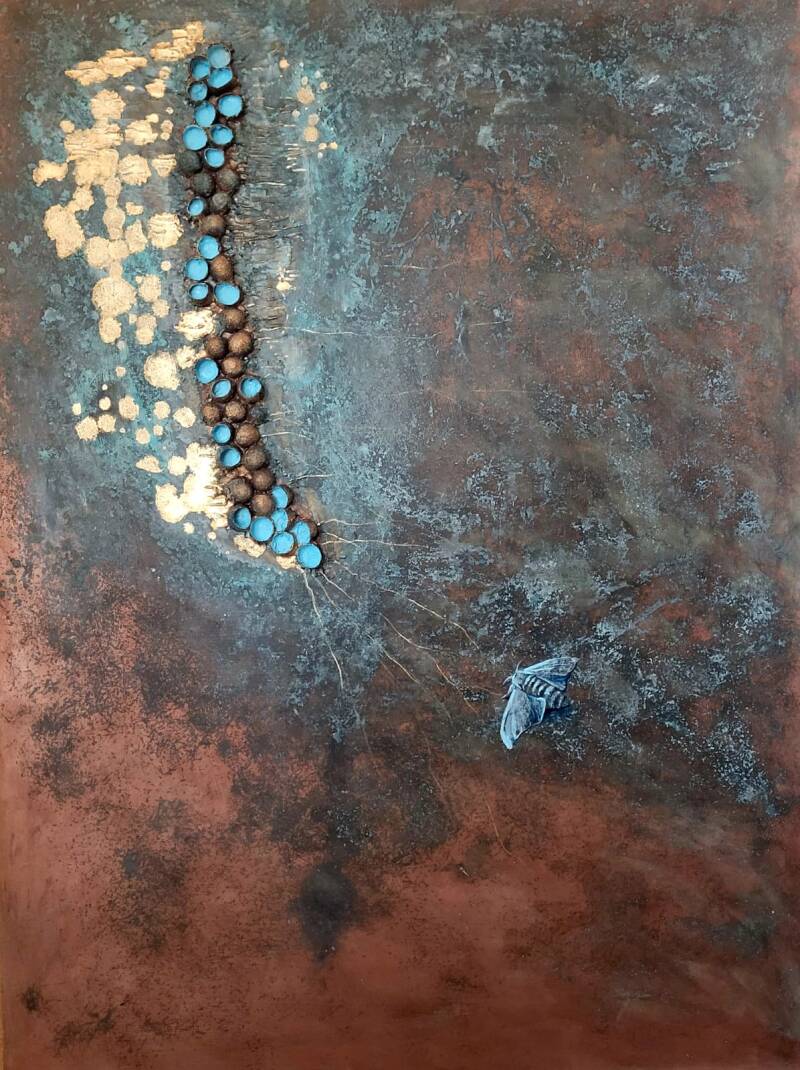
Transition Field_50X70cm
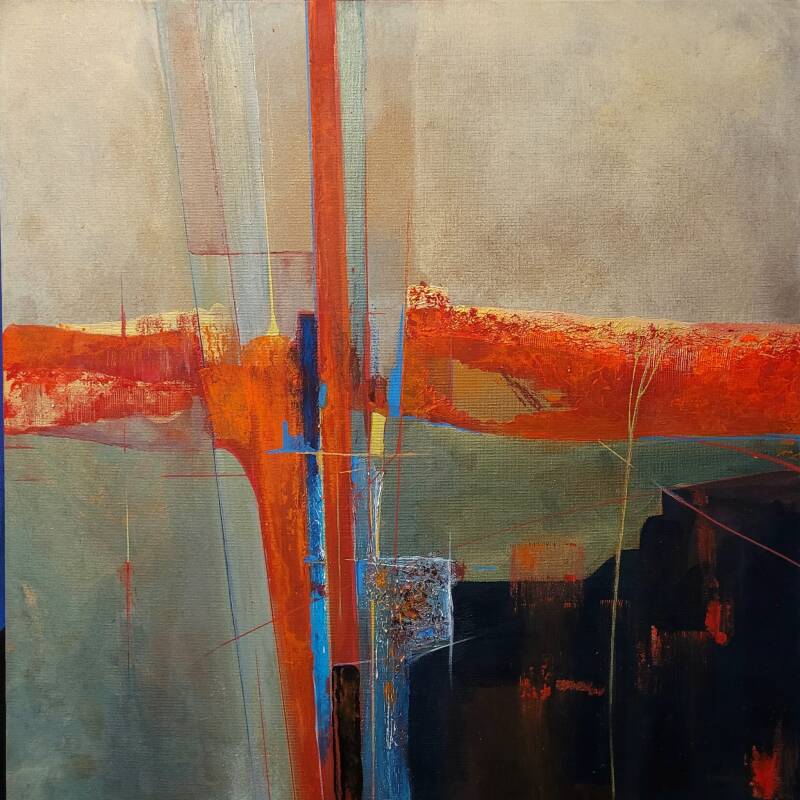
Red Meridian 50X50cm
Intervista A cura di Maria Di Stasio ©
Per Ivana Babic
IVANA BABIC - GEOGRAPHY OF THE SOUL AND ARCHETYPES OF MEMORY
Ivana Babic's work develops within a poetic territory in which identity, memory, and transformation become elements of a single, incessant existential quest. Her artistic journey appears as a continuous crossing of borders: geographical, cultural, and internal. Born in Belgrade, raised between Sarajevo and the Serbian capital, and resident in Italy for over twenty years, the artist carries within her a complex geography, made up of multiple affiliations and roots that are not mutually exclusive, but intertwined in a constantly evolving web of meanings.
Her creative practice arises precisely from this condition of crossing. In her works, there is no immobile identity, defined once and for all; on the contrary, the human being appears as a continuous construction, a changing landscape in which memory is not a simple archive of the past, but a living material that continues to shape the present. Memory, in Ivana Babic's images, becomes a generative force, a silent presence that inhabits time and constantly transforms its perception.
What is striking about his language is its ability to navigate a space suspended between the real and the imaginary, between personal experience and the universal dimension. Trees, birds, windows, doors, stairs, and masks are not merely figurative elements, but archetypes, symbols belonging to a collective heritage that the artist reworks to construct an open narrative, capable of embracing the interpretations and memories of the viewer. His works do not impose meanings; rather, they suggest, evoke, and invite us to listen to something that exists beneath the surface.
The tree, a recurring symbol in his work, becomes an emblem of this tension between permanence and transformation: its roots sink into memory and origins, while its branches reach out toward change and the future. Alongside it, the figure of the bird often appears, particularly the robin, a discreet and luminous presence that embodies resilience, the ability to overcome difficulties without losing one's inner light. These images speak to the human desire to belong to a history and, at the same time, to continue seeking new horizons. Ivana Babic's practice also moves between painting, illustration, and poetry, disciplines that, in her work, do not represent separate languages but different expressions of the same creative need. Word and image intertwine, complement, and nourish each other, giving rise to a poetic universe in which each element contributes to the construction of a complex and layered vision of reality.
In an age dominated by speed, an overabundance of images, and the fragmentation of experience, Ivana Babic's work also takes on a profoundly contemporary and, in a certain sense, enduring value. Her images demand time. They demand to be inhabited, slowly traversed, observed repeatedly. The artist constructs works that act as thresholds, as meeting places between her own interior universe and that of the viewer, deliberately leaving open spaces of silence and interpretative possibility.
And perhaps it is precisely here that the strength of her research lies: in the ability to make the invisible visible. Emotions, intuitions, memories, and states of consciousness take shape in images that seek not to explain the world, but to evoke it. Art thus becomes a bridge between the individual and the collective, a place where we can recognize and rediscover ourselves, a space where human beings can still pause and question the mystery of their own existence.
The following interview takes us into this poetic and symbolic universe, allowing us to better understand the thought and sensibility of an artist whose creative practice centers on inner exploration, dialogue between cultures, and wonder at the invisible. In an age that tends to rapidly consume images, Ivana Babic invites us to slow down, contemplate, and rediscover the profound value of the questions that inhabit our being in the world.
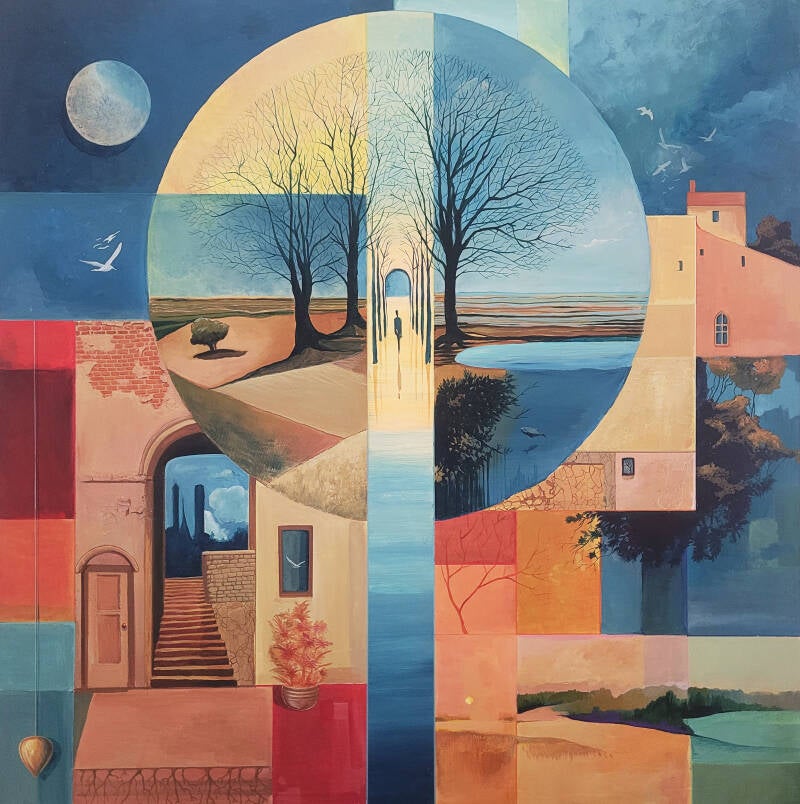
Echoes of Origin_ 80 x 80 cm
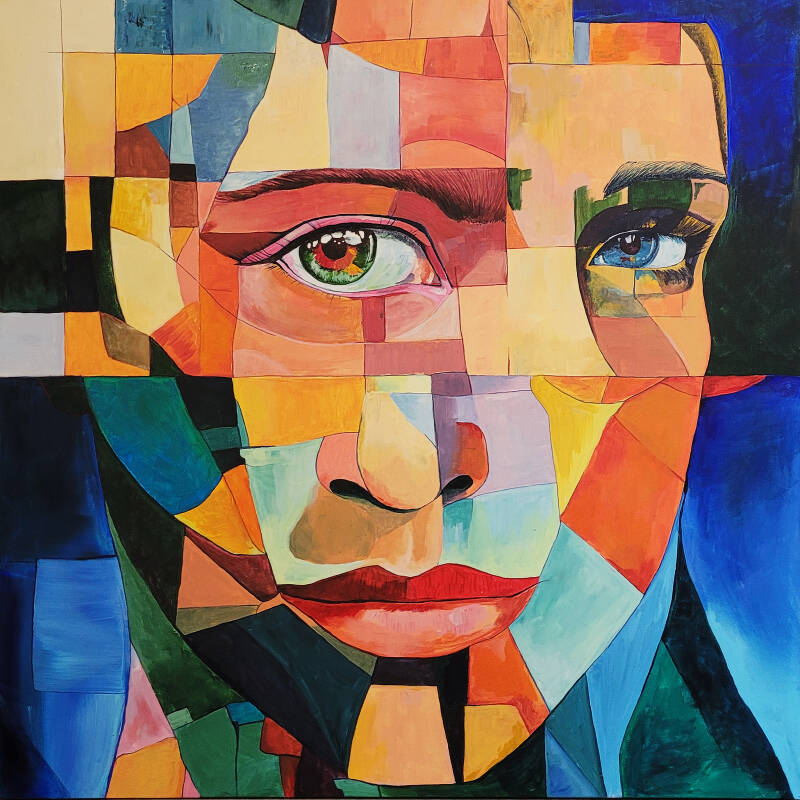
IDENTITY_80x80cm_2
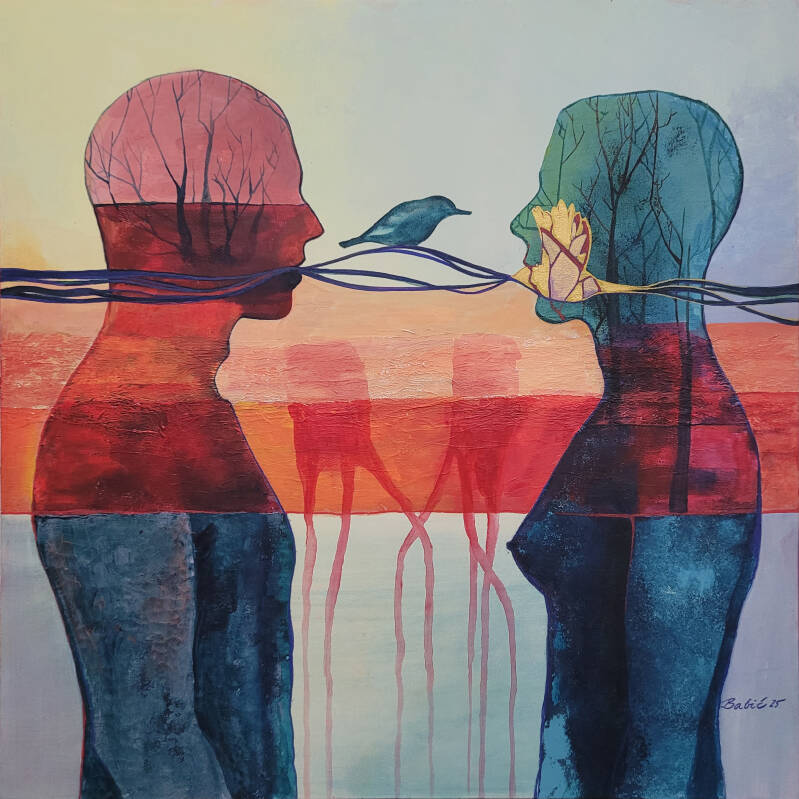
Metamorphosis of Thought_ 60 x 60 cm
1. Your art explores themes of identity, memory, and transformation. How have your personal experiences influenced this research?
My research stems from an attempt to understand how identity is constructed over the course of a lifetime. I was born in Belgrade, spent my childhood between Sarajevo and Belgrade, and have lived in Italy for over twenty years. Traversing different places, languages, and cultural contexts has led me to question what truly defines us and what part of us remains unchanged despite change. This is why the themes of memory and transformation often recur in my work. I don't see memory as a simple reminder of the past, but as an active force that continues to shape the present. Art has become the place where these questions can take shape and transform into images capable of speaking to a universal dimension.
2. You were born in Belgrade and live in Milan: how much has the dialogue between different cultures contributed to the construction of your visual imagery?
It has contributed profoundly. Living among different cultures has taught me that belonging and transformation can coexist. On the one hand, I bring with me the symbolic heritage, folklore, and narratives of the Balkans; on the other, I have absorbed the aesthetic and design sensibilities I encountered in Italy. I don't perceive these influences as separate, but rather as parts of the same internal landscape. I believe my imagination is born precisely from the encounter between roots and change, memory and discovery. It is a space in which different worlds are not opposed, but intertwine and enrich each other.
3. Your works feature recurring archetypal figures, symbols, and atmospheres suspended between the real and the imaginary. How does the symbolic language that characterizes your work come about?
The symbol is the language closest to my sensibility. I am interested in the ability of symbolic images to communicate complex meanings without having to explain them. Many elements that appear in my works—trees, birds, windows, stairs, masks, doors—emerge
spontaneously during the creative process and only later reveal deeper connections. I'm fascinated by archetypes because they belong to a collective heritage that spans different cultures and times. Through them, I try to construct open images, capable of generating personal interpretations.
4. You work between painting, illustration, and poetry. How do these different forms of expression interact in your creative process?
For me, there are no rigid boundaries between these disciplines. Often, an image generates a poem, or a word becomes the starting point for a painting. They are different languages that seek to explore the same territory. Painting allows me to work with intuition and the visual dimension, while poetry helps me give form to the most elusive. Illustration, on the other hand, introduces a narrative component that often enriches both paths. Ultimately, I consider all these practices as different expressions of the same quest.
5. You often speak of "invisible connections between the inner and outer worlds." What does making the invisible visible through art mean to you?
It means giving form to what cannot normally be directly observed: emotions, intuitions, memories, states of consciousness, profound relationships between human beings and the world around them. I believe that art has the ability to make perceptible aspects of reality that escape rational language. It's not about explaining, but about evoking. When a work manages to bring out something the viewer feels but cannot define, then a space of mutual recognition is created, in which the work becomes a bridge between inner worlds.
6. Nature, folklore, dreams, and human consciousness are important sources of your inspiration. Is there a recurring symbol or element that you feel particularly close to your artistic identity?
Probably the tree. It's a symbol that often recurs in my work because it simultaneously represents rootedness and growth. The roots are rooted in memory, experience, and origins, while the branches open toward change and the future.
I'm also fascinated by the presence of birds, which often act as messengers or guides between different dimensions. Among these, the robin is particularly close to me, a symbol that appears repeatedly in my imagination. For me, it represents resilience, the ability to navigate the most difficult times without losing one's inner light. It is a discreet yet tenacious presence, bringing with it a sense of hope, renewal, and continuity. Both of these elements beautifully express the dialogue between what belongs to us and what we are still capable of becoming: the roots that bind us to our history and the wings that allow us to explore new horizons.
7. Your compositions seem to invite the viewer to contemplation and introspection. What kind of experience do you hope the public will have when viewing your works?
I don't try to convey a specific message or a truth to be deciphered. I like to think of my works as thresholds: meeting places between my inner world and that of the viewer. We live immersed in a continuous flow of images that rapidly pass before our eyes; instead, I want to create images that require time and allow themselves to be discovered little by little. I hope the viewer feels invited to slow down, to pause for a few moments in a space different from that of everyday life. When I paint, I deliberately leave certain passages open, because I believe that the meaning of a work comes not only from the artist, but also from what the viewer brings to it: their own memories, their own questions, their own emotions. It is in that shared space that the work truly comes to life. If, in front of one of my paintings, someone can recognize something about themselves, remember something they had forgotten, or simply feel a momentary sense of wonder and connection, then I feel that the silent dialogue I seek through art has been created.
8. You have a background in applied arts and design. How does this training influence your sense of composition and visual narrative?
My design training has had a significant influence on the way I construct images. It taught me to consider composition as a system of relationships, where each element contributes to the overall balance of the work. Even when I work intuitively, particular attention remains paid to structure, visual rhythm, and narrative clarity. I believe that the design component and the artistic component are not in conflict: one offers rigor, the other freedom.
9. In the contemporary art scene, what do you think is the role of the artist today in creating new personal and collective myths?
We live in an age characterized by a vast amount of information but also by a growing fragmentation of meaning. I believe one of the artist's tasks is to create new narratives capable of connecting individual experience and the collective dimension. I don't think of myths as stories of the past, but as tools through which we interpret the present. Art can offer images and symbols that help us understand the contemporary world and imagine new possibilities. I also believe that today art has an important role in restoring a different, slower, and more profound sense of time. We live immersed in a constant flow of images that rapidly pass before our eyes, which we often consume without truly observing them. A work of art, on the other hand, can invite us to pause, to linger in uncertainty and contemplation. I'm fascinated by the idea of creating images that aren't exhausted in a single glance, but that continue to reveal new details, meanings, and connections each time we return to them. In this sense, art becomes a space of resistance to the speed of the present and an opportunity to re-establish a deeper dialogue with ourselves and the world.
10. Looking back at your career and the future, what other artistic fields do you still wish to explore?
I'm interested in exploring the theme of consciousness and the subtle boundary between the perception of reality, memory, and imagination. I'm fascinated by the idea that what we call reality is only one possible interpretation of the world and that art can open windows onto levels of experience that are normally invisible. From an expressive perspective, I'd like to further explore the intersection of painting, word, and installation, creating works that can be experienced as spaces to be traversed rather than simple images to be observed. I continue to be drawn to questions rather than answers: they fuel the creative process and keep alive the wonder of exploration.
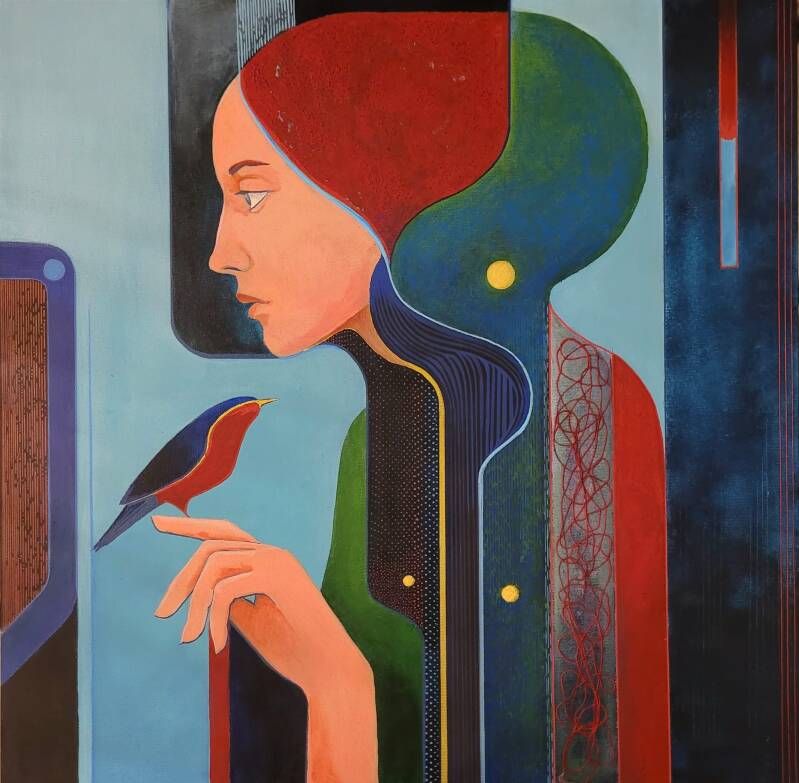
Someone answered_ 60 x60
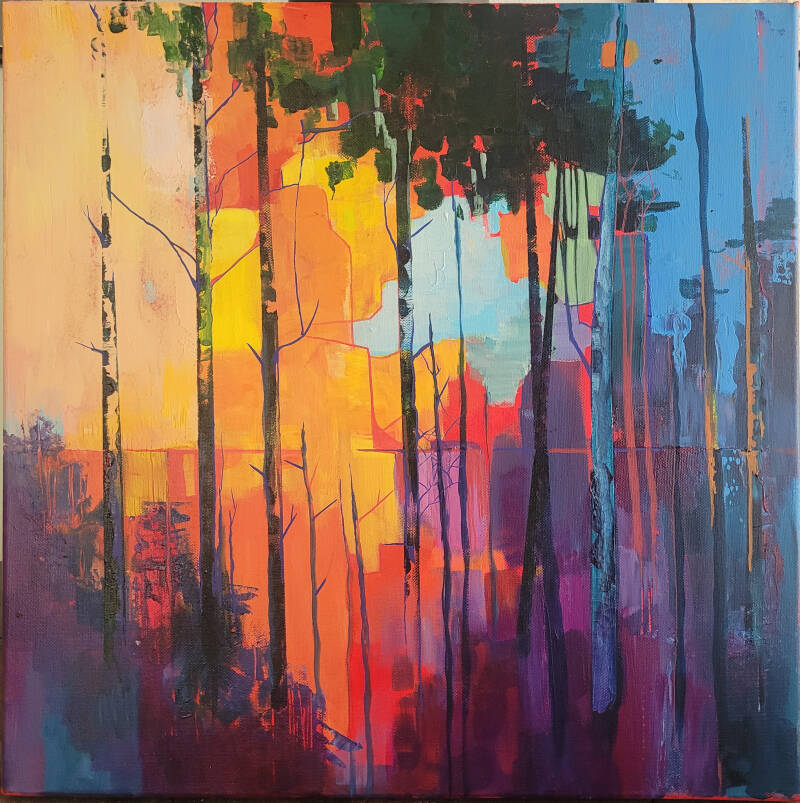
Wispers of the Forest_ 50x50cm
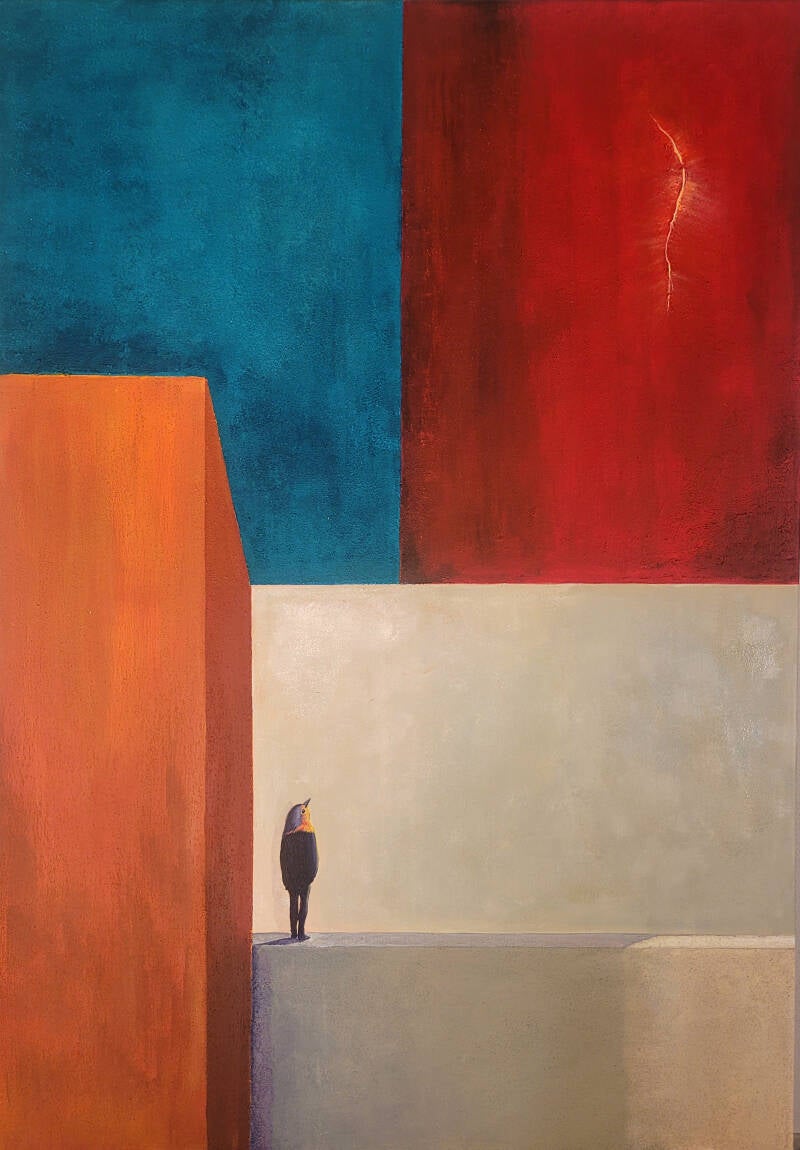
Shaping the invisible_70X100cm_2025
Maria Di Stasio ©
For Ivana Babic
Aggiungi commento
Commenti